wr

hsw logo heart shaped world

about me
home |  tarot | astrology | shop | free newsletter | about me 
the author
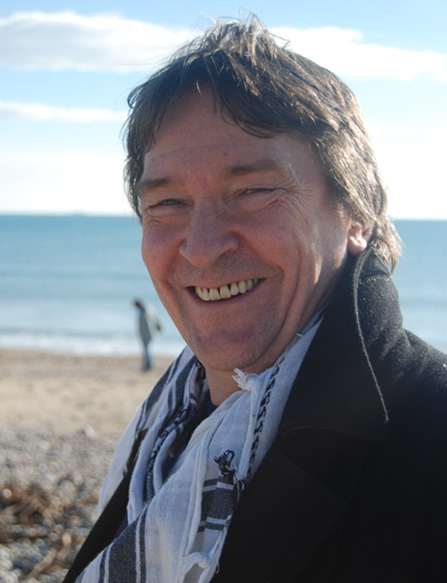
jez photo
deliberate 'spooky' shot!
Bright though...

email me

My name is Jez, I am a wizard. I am also a Bright. For over 30 years I have been a tarot reader and astrologer, by academic training I am a social anthropologist. How does all this reconcile? I'm hoping that the site itself shows this but if you're looking for the definitive response, here it is. Let's first of all deal with The Bright bit. As you will see from checking the link :
  • A bright is a person who has a naturalistic worldview
  • A bright's worldview is free of supernatural and mystical elements
  • The ethics and actions of a bright are based on a naturalistic worldview

OK... so how does the wizard bit fit in? And surely tarot & astrology are nothing if not mystical and supernatural?  Right. The Wizard bit is maybe a tad fanciful, but a minimum of research and thought will quickly demonstrate that real life 'wizards' were scientists before the term 'scientist' was coined. You'll find Viziers, 'wise-men', even the original 'magician' and some 'medecine men' & 'shamen' fit the same bill. They investigated things with an insatiable curiosity about how they worked. Once they had figured something out, the next step was putting it to a variety of uses according to their aims - or those of their patron's. Early 'scientists' like this first mapped the heavens, worked out the shape and volume of the earth (more than 5000 years ago) and were aware of complex astronomical phenomena such as precession. They used the stars as a navigation aid. They were responsible for the technology that constructed pyramids and Stonehenge, and for the long role call of human technologies that brought us here from the Stone Age. Most of these were in response to need such as devising effective calendars to guide and prompt agriculture. Much wizardry was essentially practical by nature.

free newsletter!


a regular look at the world of self-help and the mystic arts with reviews, product news &  features


sign up here
author and cat

not at all spooky but a black cat... my 'familiar' BC.

As wizarding became institutionalized around a central core of empiricism, this evidence-based approach of testing hypotheses through experiment and observation created a professional respectability that left the more fanciful and unproven 'outside' - in the super-natural. The natural and social sciences, with their professional practitioners, the scientists, educated and trained in the empirical method swiftly became distinct from those 'arts' and their adherents who were consigned to the mystical arena. With education largely controlled by the state and/or the various religions, the demonisation of the mystical naturally followed. Arthur C Clarke famously wrote that "Any sufficiently advanced technology is indistinguishable from magic" and the institutionalization of science is the process by which advancing technology is officially de-mystified - none of us regard the telephone or electricity as magic but how many of us could fully explain it and create working models? Wizards, the name associated with obsessive, robed, bearded men who used arcane symbols and read ancient texts became naturally associated with the occult - the hidden. Seekers of life's mystical hidden truths. Scientists are wizards with a white coat in place of the robe. Before they became scientists, wizards were the wise men who wrote the Histories, and recorded their experiments in 'Grimoires'. Maybe you thought of a grimoire as a book of spells? Well, a spell is an instruction, a 'how to', and grimoires were essentially manuals containing collections of 'how to' information. From 'grimoire' comes the english word 'grammar'. Thinking of wizards invariably leads to Merlin, fabled as the mentor to legendary Arthur, and when you think of spells you need to remember that if there was a golden age for wizardry it spanned that period which saw the development and refinement of language and communication. A king gifted in these new abilities wielded great power to organise and rule, Arthur's most notable accomplishments - noting that 'Arthur' is likely a collective for the earliest rulers to bind Britain as a nation, more a concept than a man. It's worth considering also, given the development of romantic love along with chivalry, that the strongest and most binding of spells ever devised is the three simple words 'I love you'.
Astrology and Tarot, practitioners often reminds us, have been around for a very, very long time. This is true but scientific respectability does not come merely with age, indeed, if anything the reverse is true. Yet although it is true that they have been around for many hundreds of years, their current best known incarnations are far from ancient.  The 'traditional' tarot reading was formally created in the 19th century from a broad mishmash of cultural references. Today it adds new decks and fads on an almost daily basis with angels, faeries, feminism, cats, aliens... the list of 'tarots' is large and growing - recognising the theory that the cards might have Egyptian origins, someone recently produced a 'tarot of ancient egypt'. Since the popularity of Dan Brown's Da Vinci Code, Renaissance themes and even a 'Da Vinci Code' deck have appeared.  It is here that the interesting thing with Tarot lies: it effortlessly spans class, race and religious barriers in its essential appeal as a 'philosophical machine'. The modern notion of astrology, irrevocably linked to 'sun signs' is as modern as newspapers and probably more so. Our frame of reference for both, these days, is the notion of 'fortune telling' which first became popular as a part of travelling fairs and later achieved much greater popularity with the development of seaside holidays, where gypsy fortune tellers could be found on the pier and the prom whilst the developing print media found an ever in demand item for people to get their astrological fix all year round through almanacs and, later, newspaper columns. Centuries of observation and theory were plundered for simple  Sun Sign sketches which, today, the majority of us are very familiar with - especially 'our own', which to a greater or lesser extent we absorb into our own sense of identity.Through Victorian and Edwardian times, the mystic arts acquired a great sheen of respectability,Theosophy being the most outstanding example from an era when seances became respectable parlour activities as well educated devotees strived to give the mystic scientific respectability.  magician
"cold reading" I am often asked 'How can you read tarot if you don't believe?' Exactly what it is that I am perceived not to believe is dependent on the world view of the person raising the objection, it could be 'faeries', 'angels' or the more nebulous 'Spirit', amongst many other possibilities, but the essential thrust is that I don't believe in some super natural force, and I have to admit that this is true.  I don't discount the 'super-real' by which I mean simply that we tend to underestimate our abilities to the extent that we are perfectly capable of confounding and astounding ourselves through perfectly natural accomplishments. I have one friend who has an almost pathological aversion to tarot readers (heated debate can be a solid basis for a friendship) and whose unwavering tarot put down is 'it's nothing but cold reading'. He is also a great fan of Derren Brown and was also a massive fan of David Blaine until the glass box by the Thames episode.  This is instructive. Derren Brown, who makes no secret of his abilities, uses cold reading, subliminal communication techniques and hypnotic command and suggestion. He explains what he does but does it so well - one might say unbelievably well - that he is respected as someone of awesome ability - indeed, I would describe it as super-real. Blaine, similarly talented, lost respect by trying to show himself as 'super-human' though everyone 'knew' it had to be a trick.
The 'stuff' we are made of, at a molecular level, was forged in the heart of massive stars -  we are indeed stardust. Is it that outrageous to believe we may be affected, in some way, by the cosmos? I think it is, given that the substantial body of scientific evidence available to us today shows no measurable or even vaguely discernible way in which such an effect might operate. There are so many problems with astrology, as a science and as a belief, that it is hard to know where to begin. Or perhaps it's easy. For astrology quite simply is not a science, and neither is it a religion. Astro derives from the ancient Greek 'star' and the ology is courtesy of the Greek 'logos' for 'theory', 'study'. Ancient roots aside, the terminology is Age of Reason, 17th Century, when astronomy and astrology were formally separated, the former continuing as the preserve of serious scientific study, the latter consigned to the mystic box with alchemy and magick. Astronomers are frequently incensed when introduced to people who think they are fortune tellers (see Bad Astrology) but so are many Astrologers. The 'fortune telling' aspect of Astrology is largely practiced by people whose knowledge of Astrology barely exceeds knowing the different sun signs. Astrology was an early investigation into human personality and behaviour later derailed into an important part of popular culture in many societies. "we are the stuff of long dead stars, our beginnings in endings"
"The fault, dear Brutus, is not in our stars, but in ourselves" "There are more things in heaven and earth, Horatio, Than are dreamt of in your philosophy" - I've heard skeptics use the Julius Caesar quote with 'believers' resorting to the Hamlet. Both, for me, miss the point. The Hamlet line should, I believe, and I speak of the playwright's intent, have the stress on 'philosophy'. The skeptic's Caesar invites us to take responsibility for our own issues rather than blame the cosmos. Art v Science. But let's turn things around here: astrology in various forms is found in all civilisations, our Western tradition traces back via the Greeks to ancient Babylon (the origin of a number system based on 12), but other 'branches' derive from cultures as diverse as ancient Egypt, the Mayans and the Chinese. The use of astronomical knowledge to systemise is as varied as the branches are racially, linguistically and historically distinct but the starting point is common. The initial observation is that while people are different from one another, those differences appear to fall into recognisable groups.With the use of the stars to provide navigation and agricultural calendars, seeing a potential link between when people were born and the group they 'belong' to is far from surprising, as is a belief that 'divination' - foretelling - might be possible. Were it known how 'old' was the starlight involved, this must surely have been greatly strengthened - the stars giving us omens, portents of the future. The Mayan astrological calendar, graphically represented, bears a striking likeness to the double helix of DNA, which doesn't mean that it was intended to, but it is far more interesting and intriguing to examine the various 'schools' of astrology from the perspective of a sociologist, comparing the similar ways in which each one provides a classification system. Then look at the modern psychometric approaches to personality testing and classification which produce remarkably similar groupings and sub-groupings.
Psychometric based personality studies are accepted as more scientific but address the same issues, working first to broad distinctions in the areas of functions, attitude and lifestyle, and identifying key distinctions such as the Myers-Briggs usage of dichotomies - extravert/introvert, sensing/intuition, thinking/feeling, judging/perceiving, each 'spectrum' providing a 'scoreable' scale.  By a less fun and more po-faced process I find that I am an aimiable-expressive (or possibly an expressive-aimiable) which is described in very similar terms as my Leo Sun/Libra Moon, and almost word for word with my Chinese combo of Snake, Tiger & Monkey. Chinese astrology is centred on personality and very complex. You are not just one sign, but a mixture of 3, and these are each multiplied by other variables. The Chinese concept of using astrological knowledge is one of knowing yourself and from where you are coming in order to understand where you are likely to be headed. As Kierkegaard said, "Life can only be understood backwards but it must be lived forwards" which, far from gazing into the future, is the real point of both Tarot and Astrology, though Kierkegaard was not referring to either anymore than Shakespeare was. When it comes down to it, eBay classes Tarot & Astrology as entertainment, and that's fine - they should be. Take out the superstition, the supernatural and what you find is a 'proto-science' preserved in popular culture - Tarot being a formative step towards psycho-therapy, retains it's ability to function as a thinking-aid through it's symbolism, and Astrology, far from 'not having any scientific basis' being founded in various scientific investigations of human personality and behaviour, and still an integral part of our sense of identity. Without superstition, being Aries or Scorpio, or a Rooster, or a Pig still means something to us, reminds us of how we are no matter how much we agree or disagree with it. Whether it describes us or we become, or see ourselves, as the sign sets out, is irrelevant - it is a part of us however it works.  I'm a Spurs fan, I like Pearl Jam, I like Yeats' poetry, the works of Andre Breton, I'm a leo, and a Snake/Tiger/Monkey combo - all these things describe me a little, none of them speak for all of me. Jez Rogers has a BA in Social Anthropology, European History  & Popular Culture.

He is a writer and poet
and a Leo (overdraft rising) 


View my page on Heart Shaped World


this site presents tarot & astrology information for the curious of all persuasions, and for anyone interested in the entertainment value for which they are much revered in popular culture worldwide

no belief systems were harmed in the making of this site
© Jeremy Rogers 2007 Document made with Nvu brights logo